We were a couple of croweaters from the York Peninsula, South
Australia, seeking warmth in the ambient areas along the Queensland coast.
Being a convert to birding a decade ago as a result of a long friendship with
Dave ‘Lumpy’ Milson now residing at Mapoon on Cape York, we were counting birds
instead of the usual cans back at our recycling depot at Kadina, SA. For years
my wife had kept a list of residents and visitors that had flown in to feed,
water, shelter or rest on our larger than normal house site. The latest
addition was a grey fantail that took the total to 38, which is probably the
number of New Holland Honeyeaters that reside and raise their young all around
our home.
Goodbyes all round saw us on the road with caravan in tow and
binoculars within reach. A pleasant surprise were regent parrots in the
township of Loxton on the River Murray. Frequent sightings of red-rumps became
the norm for days to come.

At Lake Boga we had ducks on the doorstep of our caravan but this wasn’t my idea of birding. We caught up with an old friend at Echuca and pushed out to Picola in search again of superb parrots. It has become a bit of a joke that whilst not being always at the right time, I have had several failed attempts to find this pretty parrot and yep – missed it again.

At Lake Boga we had ducks on the doorstep of our caravan but this wasn’t my idea of birding. We caught up with an old friend at Echuca and pushed out to Picola in search again of superb parrots. It has become a bit of a joke that whilst not being always at the right time, I have had several failed attempts to find this pretty parrot and yep – missed it again.
Nearing Albury-Wodonga had me in in contact with a friend who
I’d previously met at Glue Pot some years ago where he was photographing scarlet-chested
parrots. Over a cup of tea we added a new bird to our list – the turquoise
parrot. We were privileged to watch them for several hours as they watered at
the edge of a dam, fed on the ground and with swift wings, flew amongst the
tall timber.

Consumed by our new bird we paid little attention to yellow-tufted and fuscous honeyeaters feeding and watering as well. Numerous white-throated treecreepers were lovely at close distances as well as abundant numbers of eastern rosellas, dusky wood swallows, flame robins and golden whistlers.

Consumed by our new bird we paid little attention to yellow-tufted and fuscous honeyeaters feeding and watering as well. Numerous white-throated treecreepers were lovely at close distances as well as abundant numbers of eastern rosellas, dusky wood swallows, flame robins and golden whistlers.

We continued at an easy pace and encountered the gorgeous
eastern spinebills wildly fluttering and feeding in the gardens of Beechworth.
My wife, ever alert, was astute enough to look up amongst the golden leaves of
a large liquid amber tree to gaze upon a pair of gang gang cockatoos having
breakfast. How good? – right in the heart of Beechworth. By evening we were
camped alongside the River Murray at Jingellic and enjoyed watching thirty or
more king parrots feasting on crab apples, all within ten feet of us – no need
for binos.


Inclement weather saw us admiring lots of crimson rosellas
along the roadside. We bought some great T bone steaks at Tumbarumba – supposedly
Murray grey stock – and were lucky enough to find some dinner-plate size field
mushrooms. What a meal!
Boorowa next, known as THE spot for the superb parrot. But
the only superb in sight was a template of one on the bakery façade. Superb
country but no superbs. On to Mudgee where we were welcomed by in excess of
sixty red-rumps feeding on the lawns flanking the main road, not perturbed by
traffic in the least!
It is always nice to spend a night in the Warrumbungles
amongst butcherbirds, red-browed finches, grey fantails and sulphur-crested
cockatoos preparing nesting sites. We departed perfectly trimmed camping grounds
which are kindly manicured by the local kangaroos.
Admiring cockatiels in flight amongst rays of sunshine, we
set off for Gulargambone to the west of the Warrumbungles, enjoying the warmth
of the sun in the car and marvelling at the acrobatic ability of the
black-shouldered kites. To our absolute delight, what should alight from the
verdant green roadside grasses but the elusive superb parrots. So good – so
easy – so pretty! and in no rush to escape our presence. We watched them
roosting in the wilga trees for quite a while before continuing our journey
toward Bingara, feeling very satisfied.

Camping on the banks of the Gwydir River is a treat anyway,
but how delightful was sharing it with a pair of pale-headed rosellas with
their bright red patch on the nape of the neck? There are lots of variations in
the rosellas and this was pretty special.


The ensuing bad weather made for pubs with fires and counter meals as we travelled through Glen Innes, Tenterfield and some high rise therapy on the beach at Mooloolaba. Birding gave way to massages, coffee and the Eumundi markets.


The ensuing bad weather made for pubs with fires and counter meals as we travelled through Glen Innes, Tenterfield and some high rise therapy on the beach at Mooloolaba. Birding gave way to massages, coffee and the Eumundi markets.
We love our current caravan but had fond memories of 30 years
previous with kids on board and an old Viscount with three bunks at the rear.
We were now looking forward to the lovely area of Agnes Waters and 1770, where
our old van had taken us previously. On route we had a lovely stop at Rosedale,
a small village with probably no more than 20 or so houses. Here at the quaint
tea rooms while enjoying coffee and a meal amidst the shade of large rain trees
and poincianas, we were entertained by dusky, brown and blue-faced honeyeaters.
Some naughty boys - grey-crowned babblers - paid us a visit as well and kept us
amused with their boisterous antics.
On a lovely, sunny, near-perfect day, we arrived at Agnes
Waters. Whilst investigating a camp site south of town we had a real treat. In
an area the size of a footy oval adjacent camping grounds surrounded by bush,
we sighted fairy warblers, rufous whistlers, leaden flycatchers, and the lovely
spectacled monarch. If you haven’t noticed yet, pied butcherbirds, willy wag
tails, silvereyes etc don’t count on trips – until you decide to do a count. And
I started counting now because this area promised a lot.
A wonga pigeon was another tick in my dog-eared Slaters Field
Guide which is held together with sticky tape. Our Bushtracker caravan was
parked under some shade and we settled in to the sounds of red-tailed black-cockatoos.
They were feeding daily on the beach almonds that fringed our home on the sandy
banks of Round Hill Creek at 1770. Beautifully structured parks with lit
boardwalks along the beach led through some tall timber to the Tree Hotel. This
¼ kilometre boardwalk became my haunt morning and night for four days. Of the
64 or so birds encountered at Agnes Waters/1770, this area accounted for most.
The list included double-barred finches, honeyeaters in
abundance – mostly Lewins and duskies – as well as brown, varied, white-cheeked
and white throated. Varied trillers were easy targets and blue-faced
honeyeaters, noisy friarbirds, olive-backed orioles, laughing kookaburras,
figbirds and peaceful doves in abundant supply.
Some juvenile cuckoos drove me to research and identify
fan-tailed cuckoos and a better look at the belly of the bronze cuckoos led me
to establish the presence of shining bronze cuckoos. While pelicans and pairs
of pied oystercatchers paraded and fossicked on the beach, sacred kingfishers
were like sentinels watching everything. On route to the bar at the Tree Hotel
overlooking the bay, with its swaying yachts, what does my wife find? The
lovely rose-crowned fruit dove.


Reluctantly we left this lovely area with its small mistletoe birds and large white-breasted sea-eagles and travelled north to Yeppoon. Here we daily watched a pair of brahminy kites perch on rocks at the beach, eating their catch and then soaring above.

As we continued north on the old Bruce Highway to Sarina and
on to Finch Hatton, we were getting closer to friends Chris and John Storrie and
Leo the dog in Bowen, from whom we had purchased our van. On a previous visit they had taken us to
Eungella on the escarpment overlooking the lovely Pioneer Valley. Hoping to
take another opportunity to find the elusive Eungella honeyeater, we travelled
up the range with sunshine on our backs early in the morning. But clouds and
wind made for a poor look at several of these honeyeaters – a tick but no
satisfaction. Second prize was a pair of regent bowerbirds at Broken River.
Sweet!
We depart Finch Hatton. Road-kill along the highway has black
kites and whistling kites circling in anticipation of a feed. Arriving at
Airlie Beach, the caravan park again has ducks welcoming us only this time it
was the lovely plumed whistling duck. Numerous bush-stone curlews are also
non-paying residents at this park.

Red wine and the crackling of roast pork in the weber
welcomed us to Chris and John’s home in Bowen. It was decided that they should
hitch up so we could all head bush together again. It is always great to camp
in a terrific spot, see beautiful birds and be with fantastic friends.
Chris,
who is also an avid bird watcher, will now take over the story from this
croweater and tell you about our wonderful finds on the Burdekin and Herbert Rivers.
 |
| Four bushies and two Bushtrackers |
Our first morning at Mount Fox found us camped beside a creek
which had become a series of waterholes due to the very dry conditions. It was
probably for this reason that there were several different birds visiting. Our
attention was particularly drawn to the little azure kingfisher that we spied
roosting on an old tree root on the opposite bank of the creek. This beautiful
little bird was obviously on lookout duty, patiently watching and waiting for
breakfast.

We watched and waited patiently as well and were rewarded when we observed a fine catch of a small fish which was promptly transported to a small hole in the side of the muddy creek-bank. It was evident that this was the bird’s nest as, on closer inspection of the area just below the entrance, we noticed a sizeable area of white bird droppings. We were all thrilled to be able to watch this beautiful little bird busily hunting for food for the young that we presumed were safely tucked away in the nest. Other observations here included rainbow and scaly-breasted lorikeets, a fantail cuckoo, an emu and red-backed fairy-wrens.

We watched and waited patiently as well and were rewarded when we observed a fine catch of a small fish which was promptly transported to a small hole in the side of the muddy creek-bank. It was evident that this was the bird’s nest as, on closer inspection of the area just below the entrance, we noticed a sizeable area of white bird droppings. We were all thrilled to be able to watch this beautiful little bird busily hunting for food for the young that we presumed were safely tucked away in the nest. Other observations here included rainbow and scaly-breasted lorikeets, a fantail cuckoo, an emu and red-backed fairy-wrens.
 |
| This lagoon is normally fully but the lack of rain has left it all but dry. |
The next morning saw us well established in a lovely camping
spot beside the Burdekin River and this spot provided the highlight of this
particular birding venture. Our only hiccup (apart from our first ever flat on the cruiser) was Neil's discovering that his towbar was just about to fall apart. Fortunately a quick dash to the nearest little town saw it fixed next day.


You know how there are certain birds that ‘jump’ out at you every time you see them as
you browse through your trusty bird guide. Well the Pacific Baza was one of
those for me. I really thought that my chances of spotting one were pretty
slim. But when you hook up with great mates who are hooked on bird watching
like you are, you should believe that fantastic things can happen. There I was
doing what most people do first thing in the morning when I heard the words
“Pacific Baza”. I thought I was hearing things but pricked my ears and sure
enough Drogs is saying those magic words again. WELL! I was up and out of the
van so quick I amazed even myself. “Did you say Pacific Baza Drogs? What?
Where?” I couldn’t believe this was happening. I know this sounds ridiculous to
most people but I think avid birders will understand. Not just one, but a pair
of these birds had cruised over our camp. Drogs nailed them immediately,
recognising their aerobatics in flight. They eventually perched high in a gum
straight across the river from our camp and there they stayed for at least half
an hour. During that time Neil’s wife Sue even got to see them consummate the
relationship and we all got to take some great photos. I was ecstatic for the
rest of the day. This sighting had made my trip.


 |
| Red claw are abundant in the Burdekin. |

While walking along the riverbank that same morning I got to
spend quality time with a family of red-winged parrots who just sat quietly
watching me. They were to pass over our camp several times during our stay and
each time we could not help but admire their vivid red, green and blue plumage.
Being such a constant water source, the Burdekin is obviously a secure and
reliable refuge for a wide variety of birds, even in the current drought.


Each night our camp was also visited by a tawny frogmouth that would perch in the trees above our fire and watch us. Blue-faced honeyeaters were prolific as were the little grey fantails. During our three-day stay we also sighted brolgas, kites, pelicans, Australian wood ducks, blue-winged and laughing kookaburras, rainbow lorikeets, rufous whistlers, leaden flycatchers, white-throated honeyeaters, rainbow bee-eaters, egrets, apostlebirds, currawongs, galahs, red-tailed black and sulphur crested cockatoos and a little pied cormorant.


Each night our camp was also visited by a tawny frogmouth that would perch in the trees above our fire and watch us. Blue-faced honeyeaters were prolific as were the little grey fantails. During our three-day stay we also sighted brolgas, kites, pelicans, Australian wood ducks, blue-winged and laughing kookaburras, rainbow lorikeets, rufous whistlers, leaden flycatchers, white-throated honeyeaters, rainbow bee-eaters, egrets, apostlebirds, currawongs, galahs, red-tailed black and sulphur crested cockatoos and a little pied cormorant.
While camping on the Burdekin we visited family friends on a nearby property and were delighted to be treated to a tour of their impressive collection of Australian and exotic birds.


Despite the dry they have an unlimited source of water on the property which attracts many local species including galahs, apostlebirds and wood ducks.


Our next camp was on the Herbert River and again we were
totally amazed at the diversity of birdlife we encountered. Many were of the
smaller varieties which, because they are usually amidst thick foliage and they
never seem to be still, can be a challenge to identify. Having more than one
enthusiast observing the same bird proved a real advantage for us. While somebody
might be looking at beaks, legs and head, someone else might be checking out
tail, wings, size etc. In this way we managed to positively identify 21 species
during our explorations along the Herbert, including white-throated,
yellow-spotted, brown, yellow and scarlet honeyeaters, red-winged parrot,
lemon-bellied and leaden flycatchers, olive-backed oriole, red-browed finch,
grey and rufous whistler, brush cuckoo, striated pardalote, yellow thornbill, weebill and squatter pigeon. What a wonderful spot!


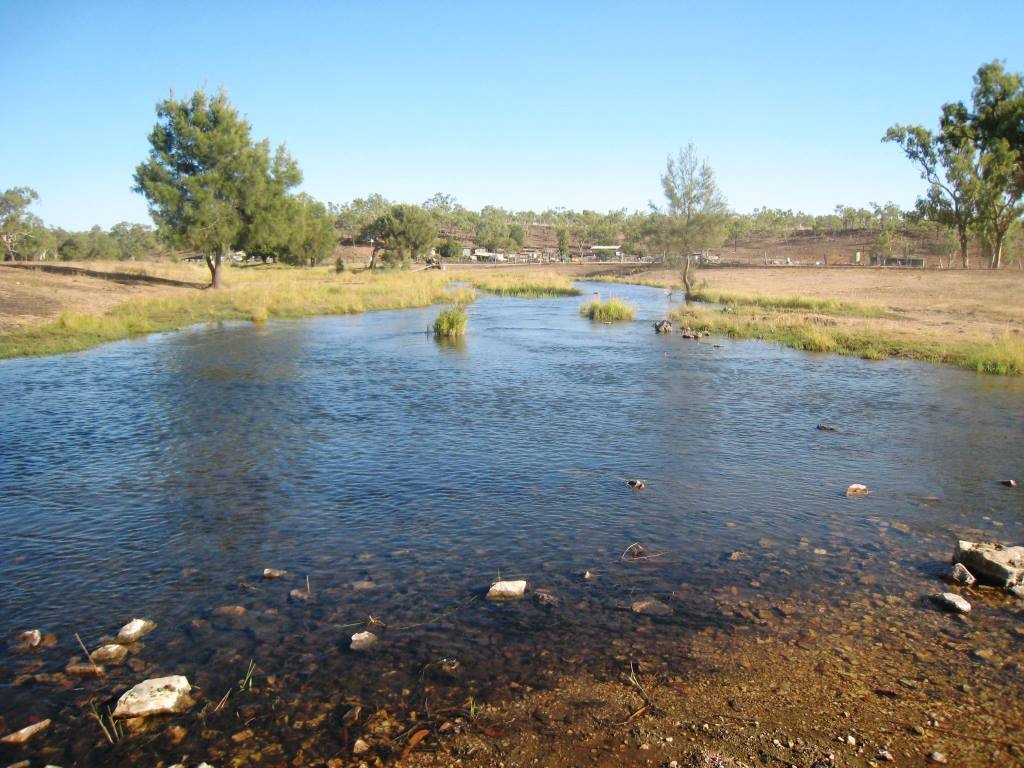
 |
| We were all pretty impressed with this true piece of bush art and ingenuity. |
 |
| Neil's figurehead is pretty impressive too! |


 |
| This old timber bridge is obviously stronger than it looks. |

While camping on the Herbert we visited the ruins of Cashmere homestead and the nearby cemetary where we gained a small insight into the history of the area.
We also visited Blenco Falls and Blenco Creek where there is a choice of several campsites.
 |
| This rock wall is just about all that's left of what must have once been an impressive homestead on Cashmere Station. |
We also visited Blenco Falls and Blenco Creek where there is a choice of several campsites.
 |
| Herbert River gorge from Blenco Falls lookout. |
 |
| Blenco Falls |
 |
| Blenco Creek |
After sharing so many wonderful birding moments, I know we
were all somewhat sad to be parting company at the end of our Burdekin/Herbert
River experience. But the great thing is that we know we will get together
again, hopefully many more times and share our love of this wonderful obsession
that is “bird watching”.


